Florist Window · Ongoing guidance
How Many Products Should a Florist Website Have?
Thoughts from Tim at Florist Window
This is one of those questions florists rarely ask directly, but it sits quietly behind many conversations about websites.
“How many products should I actually show online?”
Some florist websites show only a handful of designs. Others display hundreds of products across many categories.
The right answer usually sits somewhere in the middle.
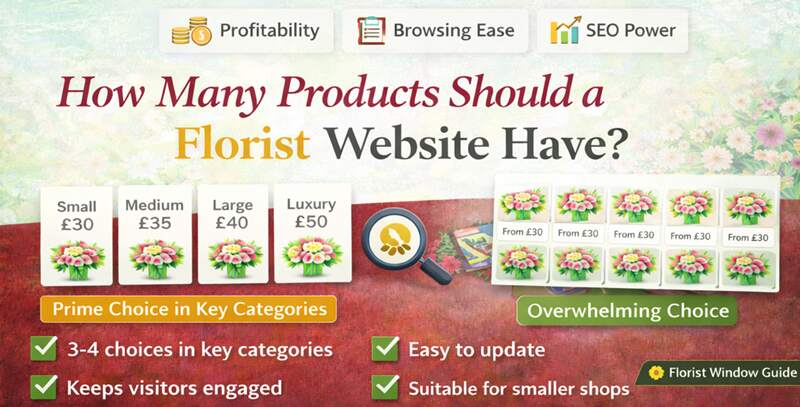
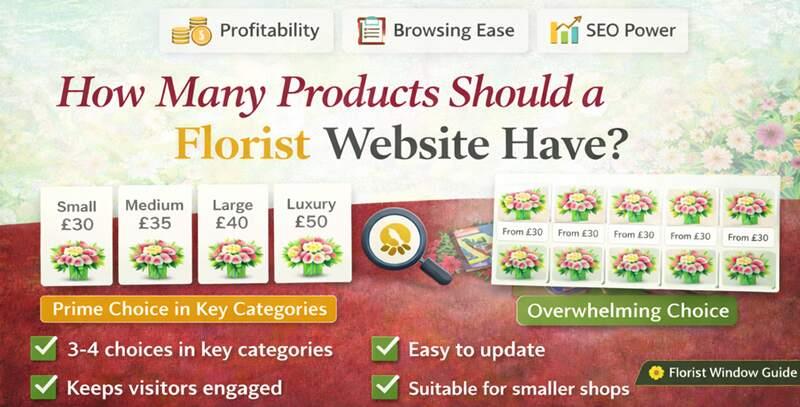
A good florist website should show enough work to give customers confidence and choice, but not so much that browsing becomes overwhelming.
At a glance
Florist websites benefit from a sensible range of products. Too few designs can limit search visibility, while too many can overwhelm customers. The goal is balance, clarity, and genuine representation of your work.
Customers like to see choice
When people browse a florist website they are often looking for inspiration as much as a specific product.
A small range can sometimes make a website feel unfinished or limited.
Showing a wider variety of designs helps customers explore different styles, colours, and price points.
It also reflects the creativity of the florist behind the website.
And as I mentioned in Should Florists Sell Flowers Online?, a florist website works best when it gives customers another easy way to discover the business and browse what is available.
More products can help search visibility
Each product page creates another opportunity for search engines to understand what your website offers.
Different designs may appear for different searches.
For example:
- birthday flowers
- sympathy bouquets
- funeral tributes
- romantic flowers
This is one reason content matters so much online, which I discussed further in Content Is King.
More useful content usually gives search engines more signals to work with.
It also ties in with Do I Need SEO for My Florist Website?, because product pages can help a florist website appear for a wider range of relevant searches when they are clearly written and properly organised.
But too many products can create clutter
There is also a point where too much choice becomes confusing.
If a customer scrolls through dozens of similar arrangements it can become difficult to decide what to order.
Clear categories and a balanced product range usually work better than simply adding more and more items.
Real designs work best
Florist websites tend to perform best when the designs shown are genuine arrangements created by the shop.
Customers respond well to authenticity.
Photographs of real work leaving the workspace often feel more trustworthy than heavily staged catalogue images.
I touched on this in the Florist Website Health Check, because photographing your own designs is one of the most valuable habits a florist can develop online.
Price points matter too
Another important part of product range is pricing structure.
Customers usually expect to see a sensible spread of options.
For example:
- entry-level bouquets
- mid-range arrangements
- larger premium designs
This allows customers to quickly find something that fits their budget.
Categories help organise choice
Rather than showing everything in one long list, grouping products into clear categories usually works better.
Florist websites often organise designs into sections like:
- Birthday Flowers
- Funeral Flowers
- Anniversary Flowers
- Seasonal Designs
This structure helps both customers and search engines navigate the website more easily.
A balanced range usually works best
Most florist websites perform well when they present a thoughtful range of designs without becoming overwhelming.
Enough variety to inspire customers.
Enough structure to keep browsing simple.
Enough information for search engines to understand the website.
A final thought
A florist website is really just a digital version of the shop window.
In the same way a shop displays a range of designs to attract customers, a website should present a clear, balanced selection of arrangements that represent the florist’s work.
Over time that combination of clarity, authenticity, and consistency tends to work well online.
More soon.
Tim